
The Greenes and the Neighbors
The People UpstairsThis flow traces the uneasy social relationship between the isolated family and the women who surround their building.
increasing Bearing strength in each event
 decreasing
Bearing strength in each eventdecreasingElevator Courtesy
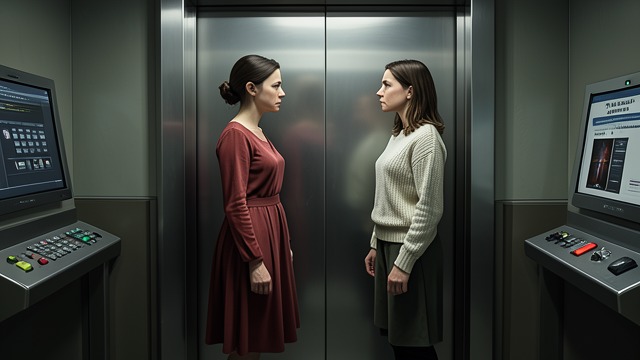
Elevator Courtesy
Formal Contact
Mrs. Gottesmann attempts conversation with May in the self-service elevator. Her interest is framed as neighborly concern but is motivated partly by the prospect of gossip.
Failed Access
May answers politely without offering useful information. The exchange establishes the distance between the family's disciplined reserve and the neighborhood's appetite for disclosure.
Their relationship is not friendship or open hostility. It is a social contest in which courtesy serves as camouflage.
Rooftop Curiosity
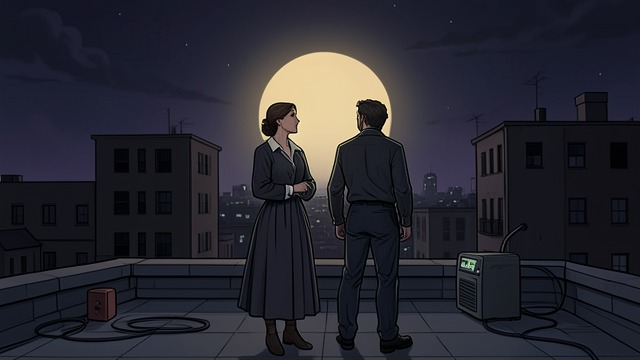
Rooftop Curiosity
Unusual Excursion
May takes Terence to the roof at night to view the distant sun of Milotis. The act is emotionally important but risks attracting attention from neighbors.
Withdrawn Wonder
She stops these visits when curiosity grows. The family must sacrifice private contact with its home world to preserve the public disguise.
The rooftop becomes a small stage for exile. Even looking toward Milotis is dangerous when Earth is watching.
Public Judgment
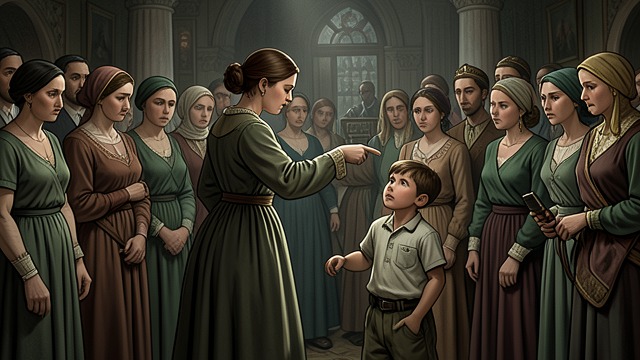
Public Judgment
Class Suspicion
Mrs. Schultz criticizes the choice of private school and praises her own children's public education. The neighborhood interprets protection as arrogance.
Defensive Courtesy
May answers with vague concerns about delinquency rather than revealing Terence's vulnerability. Her politeness is professional discipline, not genuine affection for the women around her.
The neighbors' judgment isolates May while also giving her a rehearsal space for human social behavior. Their hostility is petty but cumulatively exhausting.
during the first recorded elevator encounter
during Terence's early infancy
after Terence's private-school enrollment
